Rachel Reeves unveils £26bn tax hike as UK tax burden hits post-war high
 Nov, 28 2025
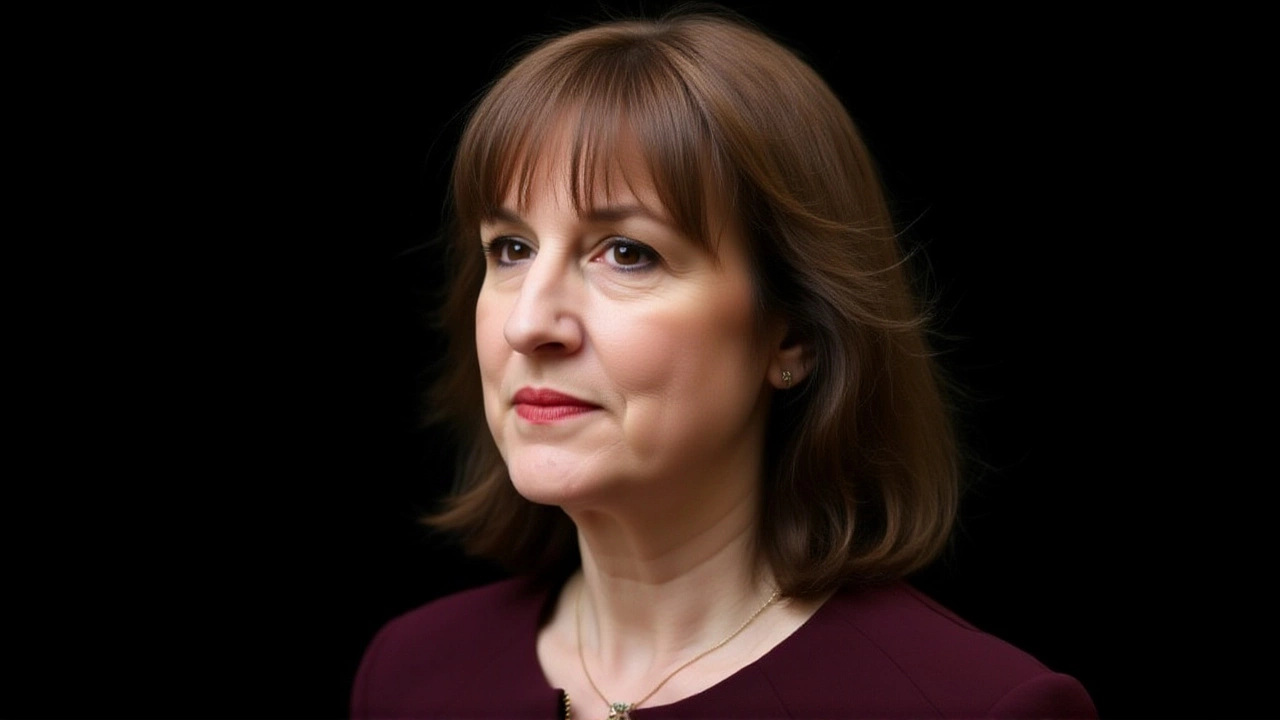
When Rachel Reeves stepped up to the despatch box at HM Treasury on Wednesday, November 27, 2025, she didn’t just present a budget—she reshaped the economic contract between the state and the British public. The Rachel Reeves’s Autumn Budget 2025London delivered a £26.1 billion annual tax increase, pushing the UK’s tax-to-GDP ratio past 38%—the highest since the end of World War II. It’s not just a numbers game. It’s a deliberate pivot: work is no longer the primary tax base. Assets are.
Why This Isn’t Just Another Tax Hike
People remember the £40 billion tax rise from last year’s budget. But this one? It’s quieter. Less dramatic. No headline rate hikes on income tax. Instead, Rachel Reeves and her team went after the invisible: frozen thresholds, pension loopholes, dividend loopholes, and property tax gaps. The Office for Budget Responsibility (OBR) confirmed the changes will generate £22 billion in fiscal headroom—the most by any chancellor in three years. That’s not just prudence. It’s insurance.
Here’s the twist: while most governments panic when inflation bites, the UK’s OBR forecasts Real Household Disposable Income (RHDI) per capita will still rise by 2.9% over this Parliament. How? Because the government’s strategy isn’t about handing out cash—it’s about growing the economy, then capturing a fairer share of the gains. As the budget document quietly notes in footnote 69: "The only sustainable way to raise living standards is through economic growth." That’s the foundation.
The Three Pillars of the New Tax Regime
The biggest revenue generators aren’t flashy. They’re surgical.
- Income tax thresholds frozen until 2030-31: This means millions will creep into higher brackets as wages rise with inflation—without a single vote on tax rates. It’s a stealth tax, and it’s already affecting 4.2 million workers by 2027.
- Pension contribution reforms: Salary sacrifice schemes that let people reduce taxable income by boosting pensions? Those are being scaled back. The government argues these benefits disproportionately favor higher earners, while employees pay National Insurance on wages. "It’s not fair," said Economic Secretary to the Treasury Lucy Rigby in a CNBC interview on the same day. "We’ve stuck to our manifesto. No conditionality. No work requirements. But we’re not letting asset income escape its fair share."
- Higher taxes on property, savings, dividends: The government explicitly called out these income streams as "unfairly sheltered." A £10 million home in Westminster pays less in Council Tax than a modest £250,000 house in Birmingham. That ends now.
The High-Value Council Tax Surcharge and the EV Tax Gap
One of the most politically sensitive moves? The High Value Council Tax Surcharge on properties worth over £2 million. It’s not a new tax. It’s a correction. Right now, the average Band D home pays £2,100 a year. A £15 million house in Kensington? £2,300. The government’s own footnote 51 calls it "an absurdity." The surcharge will be phased in from 2026, starting at 5% above the current maximum and rising to 20% by 2029.
And then there’s the electric vehicle dilemma. As more Britons ditch petrol, fuel duty revenue—once a £28 billion annual pillar—is collapsing. Enter the electric vehicle equivalent duty (eVED). It’s not a road tax. It’s a mileage-based charge, modeled on the German system. Starting in 2027, EV owners will pay roughly 12p per mile, capped at £1,200 annually. It’s not popular. But it’s necessary. The OBR estimates £3.4 billion in lost fuel duty by 2030. This closes half of it.
Who’s Winning? Who’s Losing?
It’s not as simple as rich vs. poor. The biggest losers? Higher-rate taxpayers with large portfolios. Someone earning £120,000 with £40,000 in dividends will pay £6,700 more annually by 2030. Pensioners with large savings accounts? Their tax-free allowance on interest is shrinking. But the working class? They’re getting relief indirectly—through targeted welfare spending funded by these taxes.
The government’s argument? "We’re taxing wealth, not work." And the data backs it. The tax burden on labor has fallen slightly since 2022. The burden on capital? Up 14% since 2020. That’s intentional. Rachel Reeves called it a "smorgasbord of measures," not a blunt instrument. It’s a long game.
What’s Next? The 2029-30 Deadline
All these measures—frozen thresholds, eVED, surcharges, pension caps—will fully bite by the 2029-30 tax year. That’s not arbitrary. It’s political. The next general election is due by January 2029. By the time the full impact hits, the government hopes voters will have seen rising wages, lower inflation, and improved public services. The OBR’s projection of £10 billion in additional revenue from closing the tax gap—through better enforcement, digital tracking, and targeted audits—is critical to that narrative.
There’s no guarantee it’ll work. But it’s the most coherent fiscal strategy the UK has seen in a decade. It doesn’t promise quick fixes. It promises sustainability.
Frequently Asked Questions
How will frozen tax thresholds affect middle-income workers?
By 2028, over 5 million workers will be pushed into the 40% tax bracket without a pay rise, simply because income tax thresholds haven’t moved since 2021. Someone earning £45,000 today will pay £1,100 more in income tax by 2030 compared to if thresholds had kept pace with inflation. This is the largest single contributor to the £26.1 billion revenue gain.
Why target pension contributions and dividends?
The government argues that income from assets—dividends, capital gains, pension contributions via salary sacrifice—faces no National Insurance, unlike wages. This creates a structural imbalance: a nurse earning £35,000 pays 12% in National Insurance, while a director drawing £35,000 in dividends pays 0%. The reforms aim to close that gap, raising £7.2 billion annually by 2030.
Will the electric vehicle duty discourage EV adoption?
The eVED is designed to be revenue-neutral for most drivers. The average EV owner in the UK drives 8,000 miles a year—paying £960 under the new system, compared to £1,100 in fuel duty they’d have paid on a petrol car. Low-mileage drivers pay less. Heavy users pay more. It’s a fairer system, but critics warn it could slow adoption in rural areas where EV charging is scarce.
What’s the real impact on household incomes?
Despite the tax rises, the OBR projects Real Household Disposable Income per capita will grow by 2.9% over the Parliament. Why? Because inflation is falling faster than expected, and wage growth is holding. The tax changes are offset by increased welfare spending, particularly for low-income families and pensioners, funded by the new revenue stream.
How does this compare to past tax reforms?
The 2025 tax package is the largest shift in tax incidence since the 1970s, when Labour moved from taxing income to taxing consumption. This time, it’s about taxing wealth more fairly. The tax-to-GDP ratio now exceeds the 1980s peak under Thatcher and approaches the 1990s level under Labour. But unlike then, this isn’t driven by public sector expansion—it’s about funding targeted social support.
Is there any political risk for Labour?
Yes. The frozen thresholds are deeply unpopular among middle-income voters, particularly in swing constituencies. But Labour is betting that by 2029, voters will credit them with stable public services, lower inflation, and a fairer tax system. The success hinges on whether the public believes the burden is shared equitably—and whether the promised growth materializes.